
Etiology of paresis and paralysis in rabbits
Differential
diagnosis
|
|
MediRabbit.com is
funded solely by the generosity of donors. Every
donation, no matter what the size, is appreciated and will aid in the
continuing research of medical care and health of rabbits. Thank you |

|
MediRabbit Flora showing a very slight loss of balance. In her
case it was an early sign of encephalitozoonosis,
a parasitic disease that she developped
over the next months. She also started to lose weight, in spite of
a huge appetite. |
|
|
|
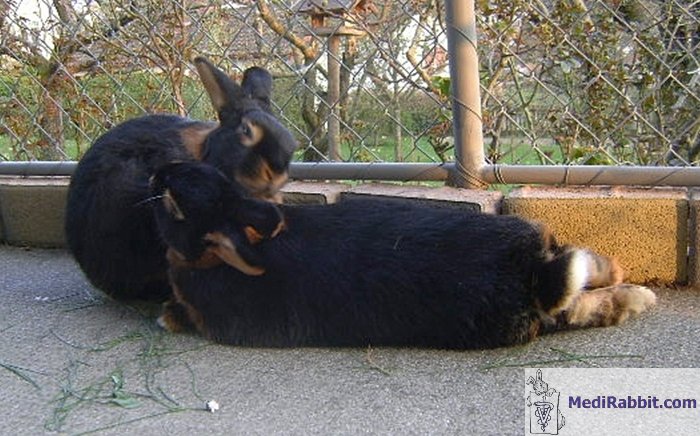
Sandra Pittet Taiga,
a paralyzed rabbit (front), due to the parasite Encephalitozoon cuniculi, with her healthy
rabbit friend Lichen (back) |
|
|
|
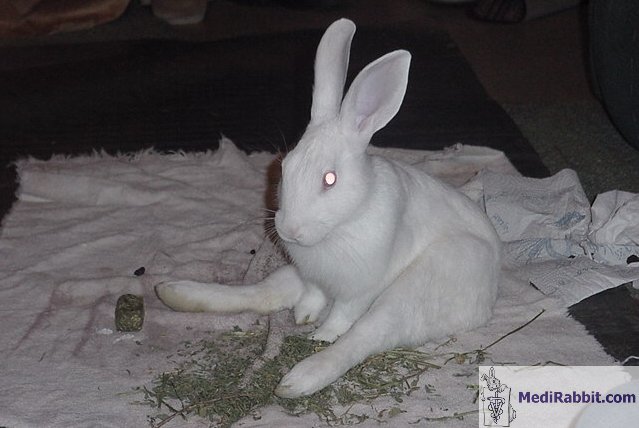
Amy Carpenter Typical
sitting position of a rabbit with weak or paralyzed hind-limbs |
|
Acute paresis (hours) |
|
Serum
electrolyte abnormalities: |
Profound hypokalemia |
|
Hyperkalemia |
|
|
Hypermagnesemia |
|
Traumatic causes |
Spinal cord injury, trauma of the spinal cord, fracture, or disease of
the CNS. |
|
Spinal cord hemorrhage, e.g. after trauma |
|
|
Disease or lesions (e.g. brain hypoxia from severe seizures) |
|
|
Disc disease,
compression of the sciatic nerve |
|
|
|
|
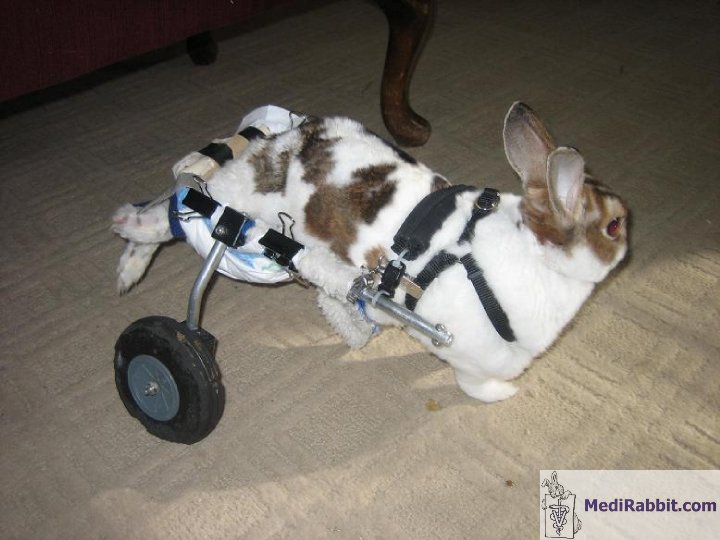
Karan Nixon George rabbit enjoying to move around in his
wheelchair after suffering from hindlimb paralysis. |
|
Subacute paresis (days) |
|
Bacterial infestation |
Brain
abscess, encephalitis, meningitis, spinal abscess caused by e.g. Pasteurella
multocida, Lysteria sp., Staphylococcus
sp.. |
|
Traumatic causes |
Muscle trauma, after excessive exercise, or prolonged pressure and
ischemia. |
|
Spinal compression |
|
|
Slow onset of paresis (weeks, months)
|
|
Protozoal parasites |
Encephalitozoon
cuniculi in the brain, accompanied by an inflammatory response of
brain cells |
|
Sarcocystis
cuniculi, causing muscle weaness in rabbits. Possibly in
presence of cats, the main host of this parasite. |
|
Neoplastic
diseases: |
Bone neoplasm, development of tumors in the spinal cord, carcinoma |
|
“Mechanical”
causes: |
|
|
Spondylosis (spinal osteoarthritis),
disco-spondylitis, presence of bone spurs or osteophytes,
which can lead to pain and irritation of the nerves |
|
|
Disk deformation |
|
|
Intervertebral disk disease |
|
Unknown cause: |
I would
like to express my sincere appreciation to Sandra Pittet (Switzerland), Karan
Nixon (USA) and Amy Carpenter (USA),
for their
invaluable contributions in the form of photographs.
e-mail: info@medirabbit.com
