
Feeding the house rabbit 7: Pellets
Camilla
Bergstrøm
|
|
MediRabbit.com is
funded solely by the generosity of donors. Every
donation, no matter what the size, is appreciated and will aid in the
continuing research of medical care and health of rabbits. Thank you |

|
Pellets are composed of a mixture of raw products that have
different nutritive values. This concentrated source of energy is formulated
to provide essential nutrients, minerals, and vitamins, ensuring optimal
growth and health in rabbits. While fresh foods are a valuable source of
vitamins and minerals, they may lack certain nutrients found in processed
foods, such as essential fatty acids. Although low concentrations of these
nutrients may not cause immediate harm to rabbits, they can potentially impact
the animal's long-term health over time.
Tal
Saarony The raw material is reduced to a size that ensures the production
of high-quality pellets, while also considering optimal digestibility and
nutrient absorption in the digestive tract of rabbits. Pelleted food is a reliable source of minerals and vitamins, but
it is important to remember that it does not provide water. Pelleted food is
designed to be absorbed rapidly by the body, so it is essential to ensure
that drinking water is provided in sufficient quantities. It is essential to
ensure that rabbits have continuous access to clean water. This can be
facilitated by providing a bottle or a stone crock, or by using both. In the event that a rabbit does not consume sufficient
water to wet the chewed pellets, water will be extracted from the body
tissues.
MediRabbit Pellets take up a lot of water: dry pellets (front row) are small
and compact, but swell several times their original size after absorbing
water (top row) In some regions, acquiring high-quality pellets can be
challenging. A reputable brand should have particles ranging between 2.5 and
4 millimeters. As the size of the particles
decreases, the transit time of the digesta through the intestine,
particularly the cecum, is prolonged. Increased fermentation of food in the
cecum can lead to digestive disorders such as diarrhea. Pellets should
contain a minimum of 18% fiber, 12-14% protein, a
maximum of 3% fat, and between 0.5 and 0.8% calcium. As a general guideline,
the fiber content should always exceed the protein
content. Small amounts of molasses may be incorporated into the pellet
mixture. To prevent an excess of sugar in the digestive tract of rabbits,
these are caramelized. The extrusion process will lead to the denaturation of protein
and starch. The structure of proteins will be disrupted, but not that of
amino acids. This process also eliminates harmful bacteria, such as
Salmonella sp., that could potentially contaminate food. It is essential to
maintain a low starch content in pellets. In many cases, starches of cereal
origin are gelatinized to enhance digestibility and prevent digestive
disorders in young rabbits. Rabbits under six months of age should be provided with unlimited
pellets. After 6 to 9 months of age, depending on the size of the breed, the
recommended amount of pellets is between 1/4 and 1/2
cup per 6 lbs. of body weight. It is essential to consider the individual
needs of each rabbit. Some individuals possess a rapid metabolism, which
necessitates an intake exceeding the recommended amount. Some rabbits naturally
gain weight more easily, and require less pellets. The same standards apply
to breeding does, rabbits suffering from disease, or recovering from surgery.
Spayed and neutered rabbits may require a reduced amount
of pellets.
MediRabbit
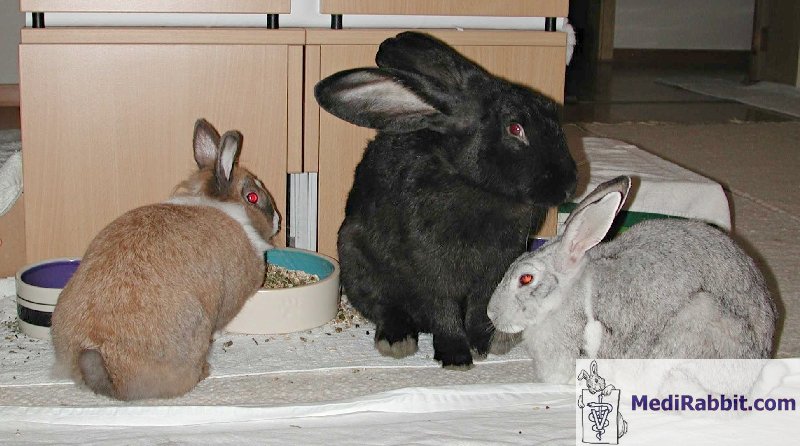
The diet of Stampi, Adar and Grisjje includes pellets Pellets are an essential component of a balanced diet, providing a reliable source of vitamins and minerals. However, it should be noted that pellets contain a high caloric content, and excessive consumption can lead to weight gain in rabbits. It is important to be aware of your rabbit's specific needs and limitations. Studies conducted by experienced rabbit owners have indicated that rabbits fed a measured amount of pellets twice a day appear to experience more frequent digestive problems, such as gas or stasis, despite having access to hay. This contrasts with rabbits with constant free access to pellets. It has been observed that rabbits fed portion are often hungry and await the pellets. Once they are given food, they will rapidly consume it without chewing it properly or mixing it with saliva. |


e-mail: info@medirabbit.com
