
Feeding the house
rabbit 1: Hay and straw
Camilla
Bergstrøm
|
|
MediRabbit.com is funded solely by the generosity of
donors. Every donation, no matter what the
size, is appreciated and will aid in the continuing research of medical care
and health of rabbits.
Thank
you |

|
Hay is
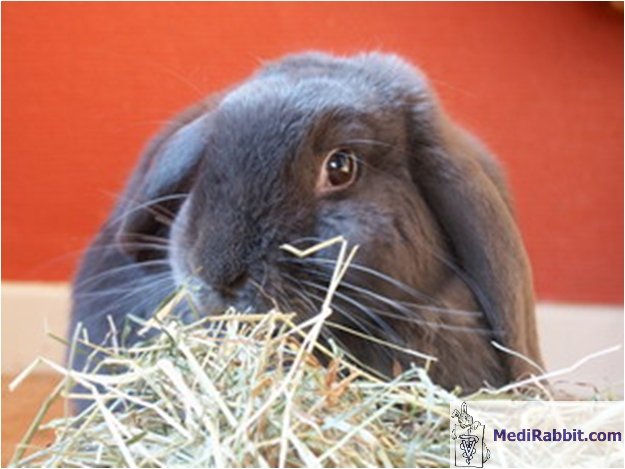
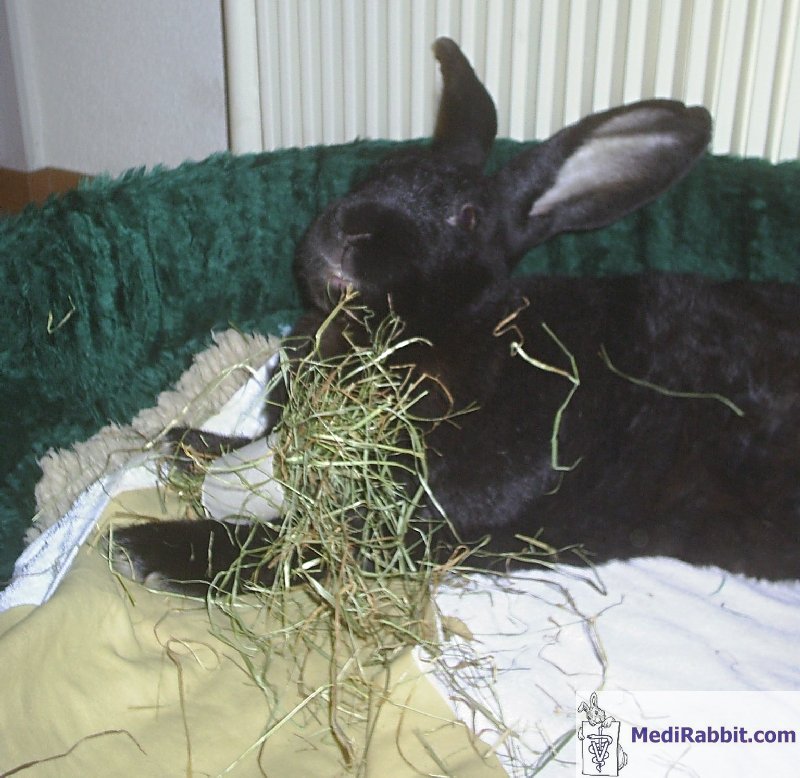
an excellent source of fiber and is the most important part of any rabbit's
diet. The rabbit's digestive system requires significant amounts of
indigestible hay fiber to function properly. Consequently, hay must be readily available at all times. Fiber
plays a crucial role in a variety of key functions: • Protects against gastro-intestinal stasis;
• Prevents constipation caused by
accumulation of fur in the intestines; • Adds moisture and volume to the feces; • Prevents enterotoxaemia; • Provides a healthy bacterial balance in
the cecum. The
rabbit's digestive tract is capable of processing substantial amounts of
high-fiber, low-calorie food. An insufficient intake of fiber can lead to
significant health concerns, such as dysbiosis of the bacterial flora in the
digestive system or diarrhea. One approach to address these issues is to
provide the rabbit with unlimited amounts of grass hay daily. The
quality of the hay is of great importance. High-quality grass hay is
characterized by a rough texture, a green color, and a dry consistency. It
possesses a sweet and spicy aroma and generally appears appetizing. Some have
noted that the aroma of good hay is reminiscent of the smell of tobacco.
Timothy and alfalfa hay are suitable alternatives. It is essential that the
hay is free from excessive dust. The presence of dust particles in the hay
can have a negative impact on respiratory health. The hay available in pet
stores is frequently of substandard quality, which can result in rabbits
refusing to eat it. It is often more advantageous to purchase from local
farmers or stables. Any hay that has become moist or has a moldy smell must
be removed from the rabbit's immediate environment. Such hay can cause
illness and must be disposed of immediately. Hay
should be stored in a dark, dry place. Direct sunlight may ruin important
vitamins and minerals in the hay. The hay
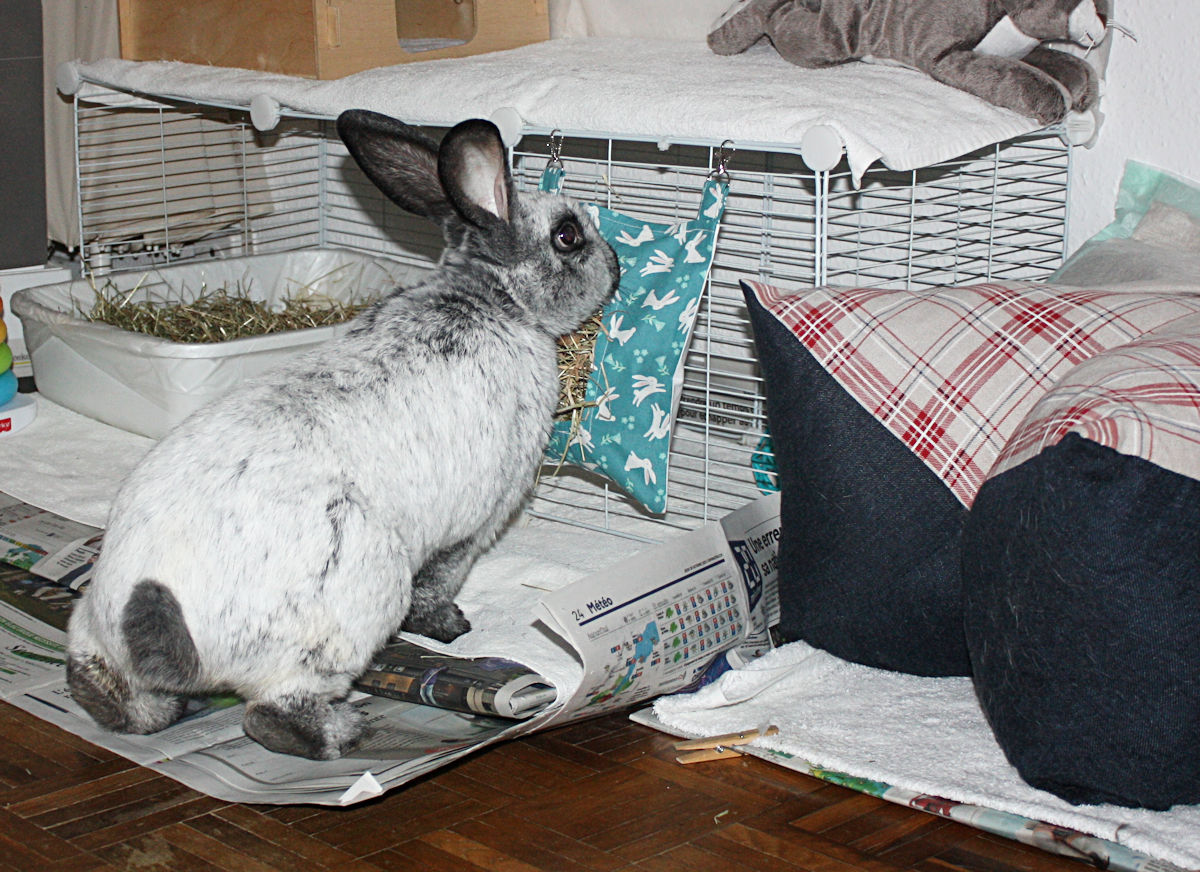
can be offered in a basket, a hayrack, a rabbit hay feeding bag,
or in the litter-box. Any hay that ends up on the cage floor and gets soaked
in urine and droppings must be removed as soon as possible. Otherwise, it can
become moldy, which can lead to fatal consequences for the rabbit. One
strategy to increase consumption is to present hay in unconventional
containers, such as wicker baskets, empty paper rolls, or other appealing
containers. Another method to increase hay
consumption is to place the hay directly on the floor in the rabbit's living
area, away from the litter box. This ensures that hay is consistently
available, allowing the rabbit to graze undisturbed on the ground, as is typical
for its species. Advice from Michel Gruaz (Switzerland): Straw can also be provided for rabbits.
Straw obtained from barley is an ideal litter for Rex rabbits, as it helps
protect their sensitive feet. This type of straw is highly regarded by
rabbits due to its capacity to absorb significant amounts of humidity. Straw
obtained from wheat has properties like those of barley straw. The highest
quality hay for consumption is oat hay. It absorbs humidity less. A rack is
an effective solution for the recovery of clean, dry strays. This approach
also prevents the rapid growth of the dung heap. The resulting dung will be
of higher quality. The quality and affordability of straw make it a suitable
choice for use as litter. To summarize, the hay is in the rack, and the straw
is scattered on the ground.
|
||||||
e-mail: info@medirabbit.com
