
Katrina: reduction
of size of kidney stones
and testimony of Pocky
Kim Chilson
|
MediRabbit.com is funded solely by the
generosity of donors.
Every donation, no matter what
the size, is appreciated and will aid in the continuing research of medical care
and health of rabbits.
Thank you
|

Note of
caution: Any
use of medication or natural product in a rabbit affected by a health disorder
must be discussed with the veterinarian treating this rabbit. The information
presented here is indicative and for educational purpose only – not a
substitute for a veterinary consultation.
|
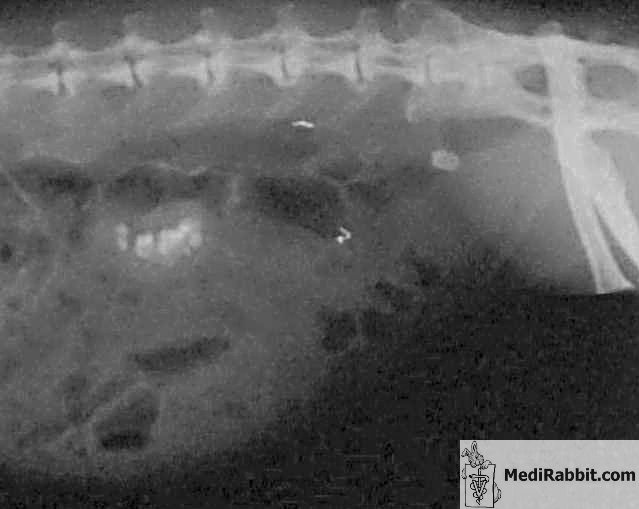
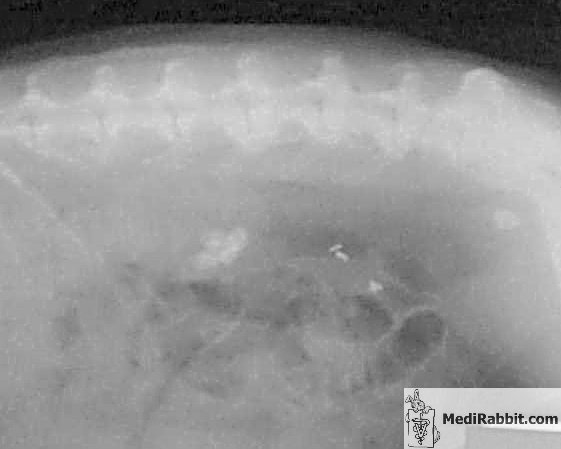
Nephroliths and uroliths, also called calculi or stones, can develop in
the kidney or bladder of rabbits, independently from age and breed. Male
rabbits are more prone to the development of stones, due to their long
urethra. These stones are rock-hard crystal aggregations that exist in a
range of shapes and sizes. When they are small, but present in large
quantity, the condition is referred to as “sludge” or “sand”.
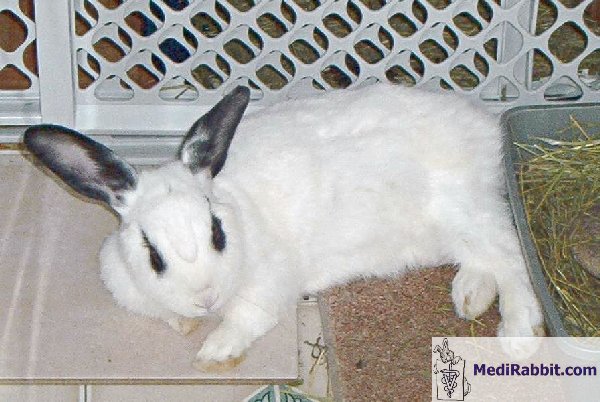
Katrina, a female albino rabbit,
years old, suffered from kidney stones, among other health problems. No
treatment exists, except removal of a kidney. After researching on this topic
with Susan L. (USA), we wanted to give it a try. Dr B. Langhofer
(The Scottsdale Veterinary Clinic Scottsdale, Scottsdale,
AZ, USA) was involved in every step of the treatment given to Katrina too. Katrina has been free fed alfalfa pellets,
dry oatmeal with the powered pumpkin seeds mixed in, a lot of greens,
including those high in calcium, and also, most recently, a few citrus
leaves. She eats about 1/2 bunch parsley a day, too, and oat heads, and triscuit crackers. And carrots, and bananas every day.
She has not been at all restricted in calcium, because I simply thought I was
feeding her things she loved before she died, so why stop giving her what she
likes, if that makes sense. I just added the citrus leaves (pink and white
grapefruit trees, Navel orange, Tangelo, Lemon, dwarf Lemon maybe 3-5 leaves
most days), as she seemed to really enjoy them on the few times I brought a
couple home. Along with the subcutaneous fluids,
which we were not giving any more, she had Buprenex
for pain, very seldom used. She seemed to do better without either of these
most days. She got an adequan shot every month. As
for regular diet/ supplements/ meds Katrina got: 10 mg/kg Baytril liquid bid since the first blood test.
This appears to help her. 10mg Coenzyme
Q-10 once a day Nettle
150mg/day (Urtica dioica
Leaf) - from freeze dried capsules, mixed 300mg/mL she gets .50mL of that mix
a day.(equals-150mg day) Quercetin .50mg day (from Nature's
Life, labeled Quercetin extract (Dimorphandra Pod) 400 mg cap mixed with 4 mLs liquid to make 100mg/mL, she takes .50mL day=50mg/day Milk
Thistle-50mg bid Brand- Spring
Valley; labeled: standardized extract (Silybum
marianum) (seed) (standardized to contain 80% Silymarin 140 mg) mixed 175mg/10 mL liquid, so she is
getting about 17mg/daymilkthistle Dandelion
.50 day of following
liquid product made by "Sprouts", labeled: Certified Organic Fresh
Dandelion root (Taraxacum officinale) Herb Strength
Ratio 1:1.5 serving size
labeled as 1mL=667mg/mLHerb weight Equivalence Chamomile
.50mL a day of following
liquid product from "Sprouts" brand extract
labeled: from German Chamomile flowers (Matricaria
recutita) Fresh Flowers Fresh Herb/menstruum
ratio: 1: 1.25 Ground raw
pumpkin seeds, ground in coffee grinder, mixed half and half with
dry oatmeal, free fed all day... she eats approx
1/4 cup a day. She has not been restricted in diet
in any way, she is allowed to eat alfalfa pellets,
timothy an oat hay, free fed all day. She also gets spring mix greens and
parsley, banana pieces(about 1 tsp), carrots,
fed every morning and night...eats more some days, but always eats pretty
good. She gets about 1 1/2 triscuit crackers every
day for treats, too.
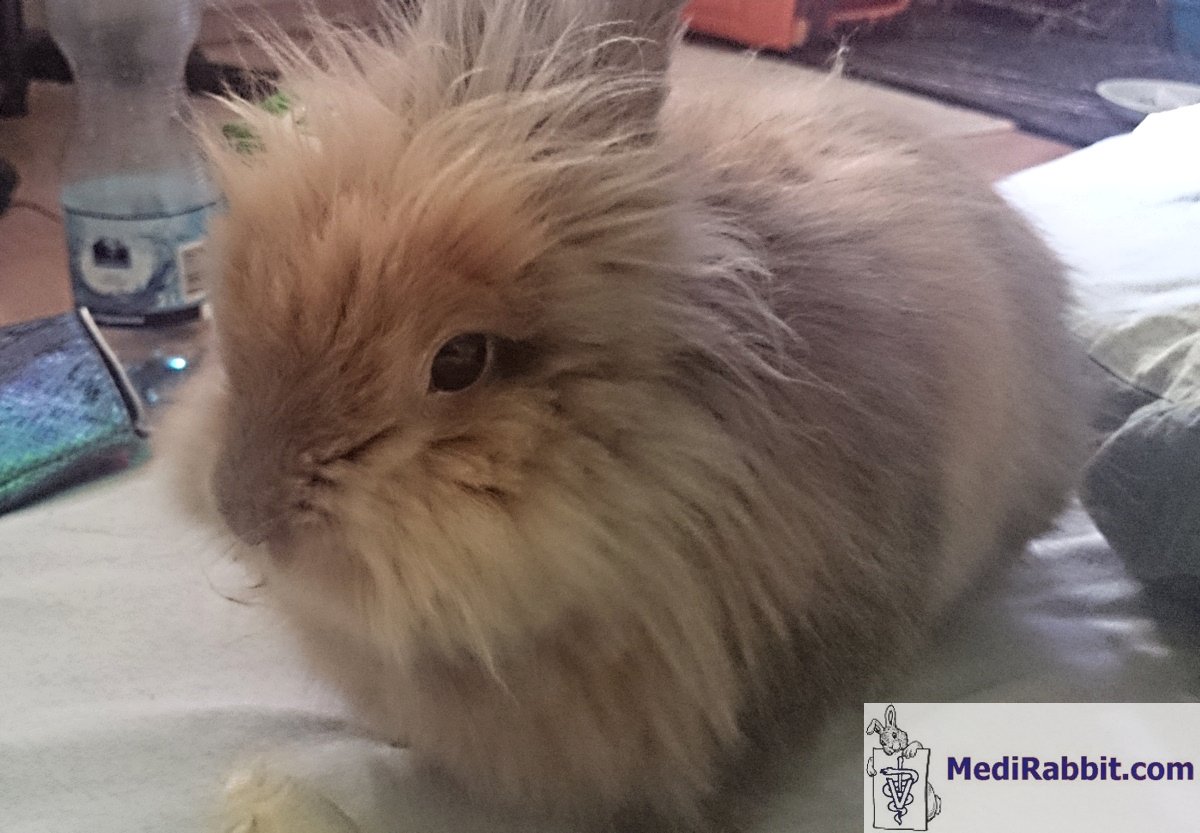
.Testimony of Tina Limanowska My rabbit Pocky had kidney stone in her left kidney and she was
going through a lot of pain (there's my old message quoted, so you can see it
if you don't remember). I tried the
herbs diet that was used on rabbit Katrina, you had
a post about her kidney stones situation on your website. I tried all the herbs that were noted in
Katrina's diet for about 4-5 months and it worked!!!! I changed my veterinarian to a new one, he is a wonderful
and very skillful doctor, he checked
my rabbit and said there is some visible changes in her kidney and bladder
showing that there was some sludge and kidney stone before but it is all
gone. That was almost a year ago.
Pocky is still alive and
doing very well, I taught her to drink
water again (because she really didn't like to drink it) by adding some fresh mint and coriander
leaves and she drink a lot and everyday now,
even in the summer. I wanted to
let you know about the mint and coriander in case you'll be contact by
someone that have the same problem,
and the rabbit doesn't like water even with a bit of juice, they might
want to try that, maybe it will help. |


e-mail: info@medirabbit.com
