
Case report: Bilateral symmetrical alopecia in an
unaltered rabbit
Kim Chilson
(Thank you for the permission to use the
following text and pictures)
|
MediRabbit.com is
funded solely by the generosity of donors.
Every
donation, no matter what the size, is appreciated and will aid in the continuing
research of medical care and health of rabbits.
Thank you
|

Warning: this file contains pictures that may be distressing
to some persons
|
Vince
is a long haired black rabbit, 8 months old, not yet neutered (I have had him
since June 2009). He shares a gate with my rabbit Grizelda,
the one with the broken pelvis and leg, and heavy fur mat. Vince is very interested
in her of course.
Last
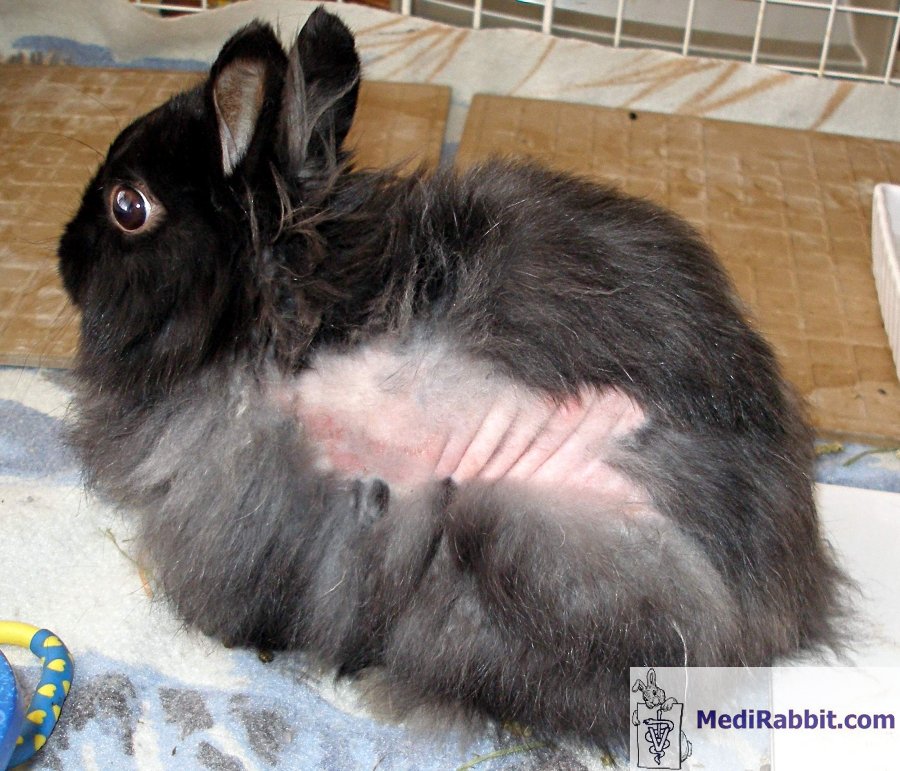
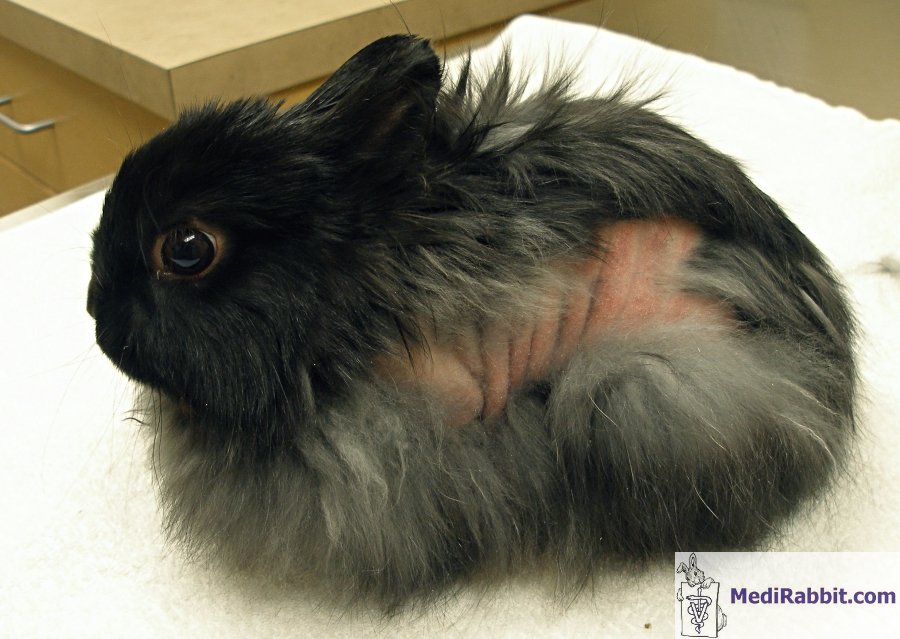
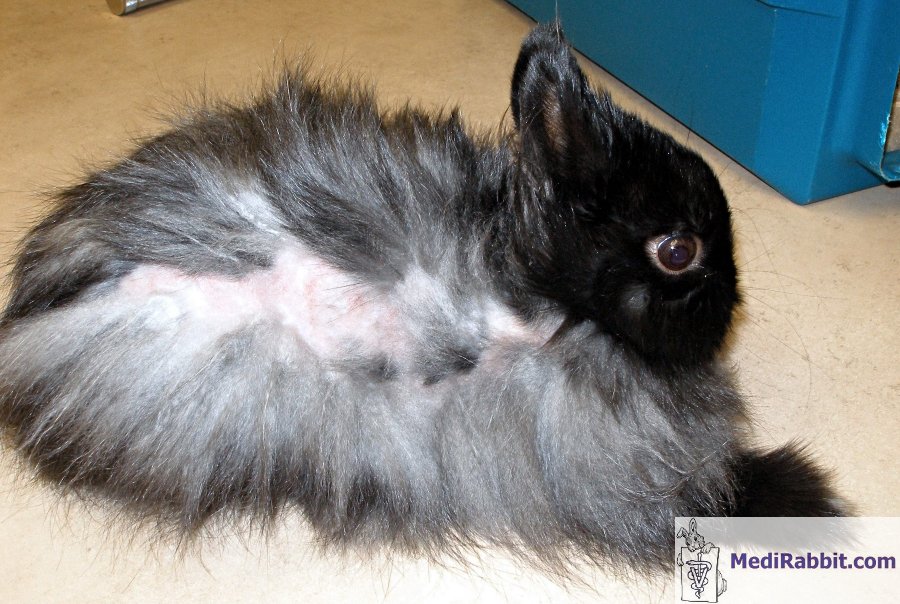
Sunday (Nov. 8, 2009), my daughter groomed him. The long gray fuzzy fur came
off very easily, and when she was done, he had a band of bare skin around
both sides. There was fur showing through on the top already growing under
the longer shed fur; but the sides were naked. He shed like this one other
time. When
the fur came out that night and the next days he had pink soft skin, nothing
odd except it was hairless...and he had chewed a little red spot on the left
shoulder....
Within
a few days, I noticed some redness where he had been chewing more. By
Saturday, he had visible chafing along the sides, mostly on the ridges of the
wrinkles formed when he turns to groom. Today, it is a bit more severe. I
took photos at vets, but they do not show too well the irritation. I
thought it might be mites, although I figured the skin would have looked like
that at the very first when the fur came out. Which it did not. I wonder if
the loss of fur can contribute to less sebum on skin, and also, I know he
gets excited by the other rabbits (not just Grizelda)
and chews from excitement. Left side view
Right side view
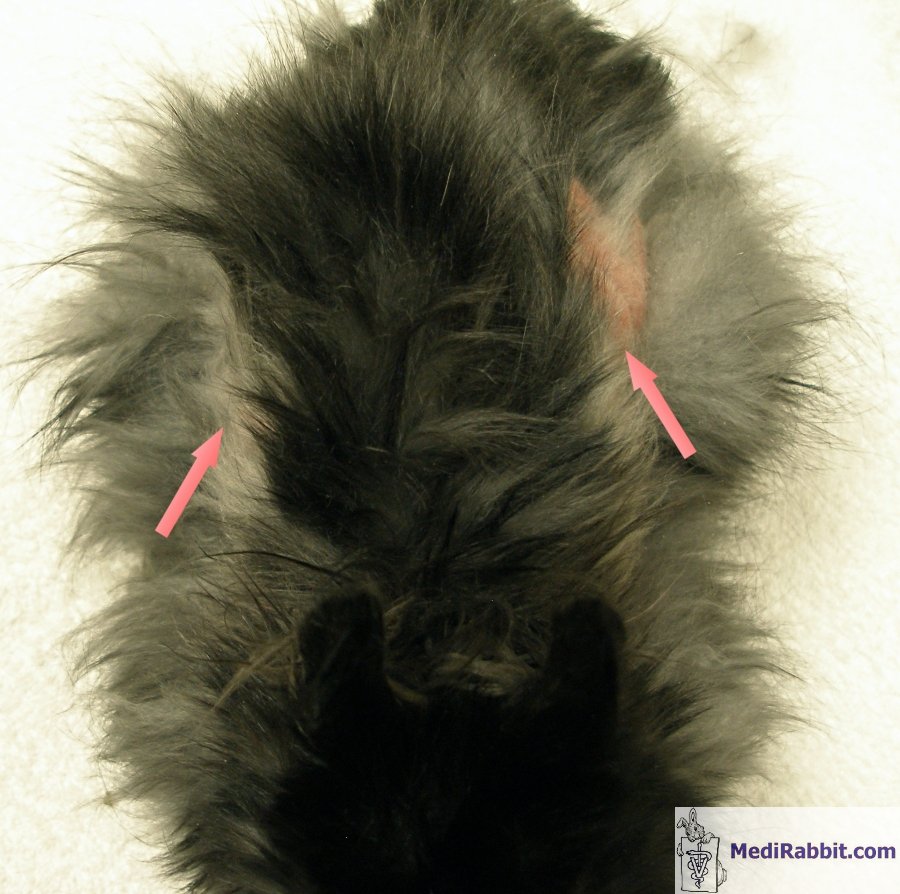
Top
view of bilateral alopecia
I took
my little Vince rabbit to have a pre-neuter visit with Dr. B. Langhofer (The Scottsdale Veterinary Clinic Scottsdale, Scottdale, AZ, USA) this afternoon. Vince is fine. Dr. Langhofer thought it might be from what he called "Male frustration grooming"
and did not think it was mites. The ears are clear, as is the skin that is
furred over the back. The bare patches look pretty sore. He is going in to be neutered tomorrow at
11 am. Bilateral
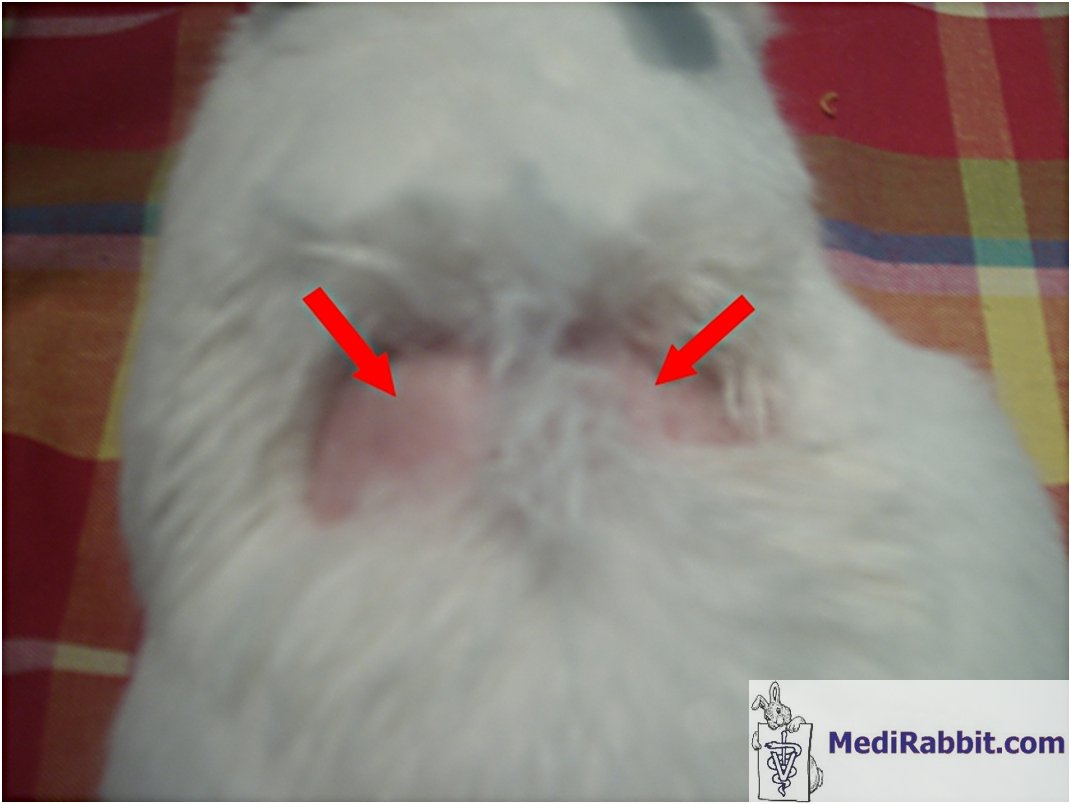
alopecia Rarely,
symmetrical bilateral alopecia is observed in a rabbit. Due to the scarcity
of the cases, and few veterinary publications on this topic in rabbits, the
problem is often misdiagnosed. In another
male rabbit:
Courtesy of Louise Geddes Scleroderma-like
lesions were reported in an unaltered 6-year old male rabbit. The skin presented
redness, thickening and induration, with growth of nodules. In addition, Leydig cell tumors were observed in the testicles. Serum
level of testosterone was elevated. Since castration brought improvement of the observed
clinical signs, it is speculated that the skin condition was linked to the
elevated level of circulating androgen hormones. In non-spayed female rabbits, symmetrical bilateral alopecia may
be associated to a hormonal disorder caused
by ovarian diseases. In various animal species, hyperestrogenism
is accompanied by fur thinning in the urogenital region. The mammary glands
and vulva may appear swollen. If radiography does not show the presence of
tumors in other organs or lungs, an emergency ovariohysterectomy may help the rabbit regain health. In one case, symmetrical
bilateral alopecia has
been linked to thymoma, the growth of a benign
tumor in the thymus gland, located in the upper chest. The skin showed
features typical of exfoliative dermatitis and
labored breathing. Treatment There is no known cure available for
scleroderma-like symptoms in unaltered male rabbits, other than castration. For detailed information on hormonal skin disorders
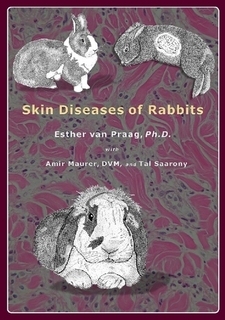
in rabbits, see: “Skin Diseases of Rabbits”, by E. van Praag, A. Maurer and
T. Saarony 408
pages, 2010.
Further
readings Florizoone K, van der Luer R, van
den Ingh T. Symmetrical alopecia, scaling and
hepatitis in a rabbit. Vet Dermatol. 2007 Jun;18(3):161-4. Kojimoto A, Naitoh H, Ozaki S,
Suzuki S, Murakoshi N, Yokota K, Uchida K. A
scleroderma-like lesion in a rabbit with Leydig
cell tumors. Jap J Vet Anesthesia
& Surgery 2006;37:39-42. |

Thank
you to Vince for his patience and his cooperation in taking the numerous
pictures.
e-mail: info@medirabbit.com
