Upper Respiratory Tract Disease in Rabbits
Esther van Praag, Ph.D.
|
|
MediRabbit.com is funded solely by the generosity of donors. Every donation, no matter what the amount, is appreciated and will aid in the continuing research of medical care and health of rabbits. Thank you |

|
Till recently, respiratory diseases in rabbits have been connected to the presence of the bacterium Pasteurella multocida, therefore the disease was called Pasteurellosis. This diagnosis is definitively outdated, after cultures of samples taken from diseased rabbits revealed the presence of a variety of bacteria: Bordetella bronchiseptica, Staphylococcus sp., Pseudomonas sp., Chlamydia sp., Acinetobacter sp., Moraxella catarrhalis, Mycoplasma sp., etc. Non-bacterial causes can also lead to respiratory diseases in rabbits: · Viral, due to poxvirus, Myxoma virus (see: Myxomatosis), or Herpesvirus (see: Herpes sp. virus in rabbits); · Mechanical or neoplastic obstruction, due to the presence of a piece of hay, or tumor (polyp, malignant tumor), respectively; · Cardiovascular causes; · Hypersensitivity to dust or smoke (e.g. ammonia vapors from the litter-box, cigarette smoke, hay or pellet dust, pollen). Allergic reactions are rare in rabbits; · Presence of a foreign body.
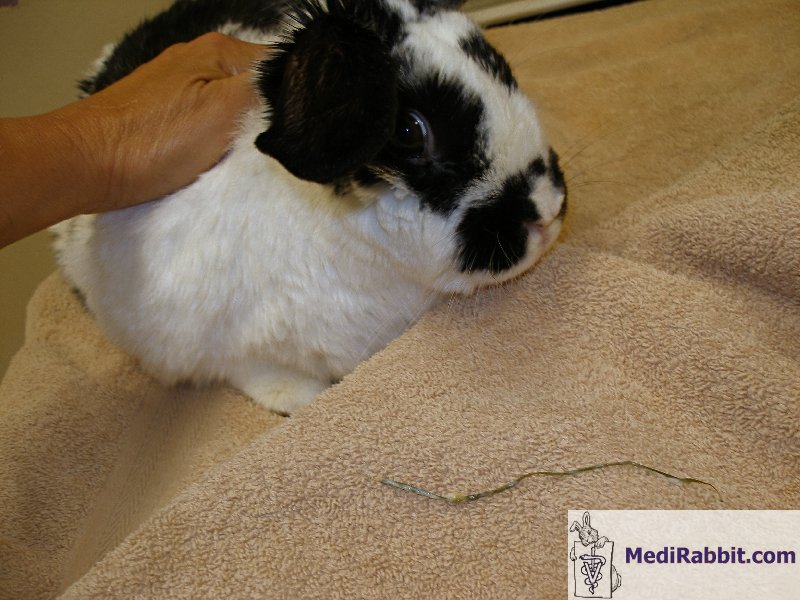
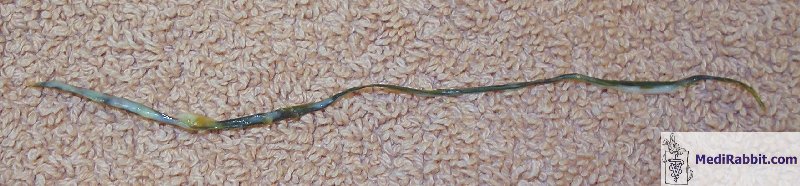
Kim Chilson Rune, and the piece of hay that came out of the nostril. Respiratory disease can be divided into: · Upper respiratory tract disease, which is characterized by nasal and ocular discharge, sneezing and snoring, rarely fever.
· Lower respiratory tract disease, which is characterized by anorexia, depression, dyspnea (abnormal or difficult breathing) and cyanosis (blue discoloration of tongue, lips, gums, due to shortage of oxygen), fever or hypothermia. Lower respiratory tract disease can remain undetected for a long time, till the disease develops in an acute form, with difficult respiration and sometimes coughing. When respiration is difficult, it can be accompanied by bilateral bulging of the eyes and excessive appearance of the nictitating eyelid (also called third eyelid). For causes of respiratory disease in rabbits, see: Differential diagnosis for difficult or noisy respiration �
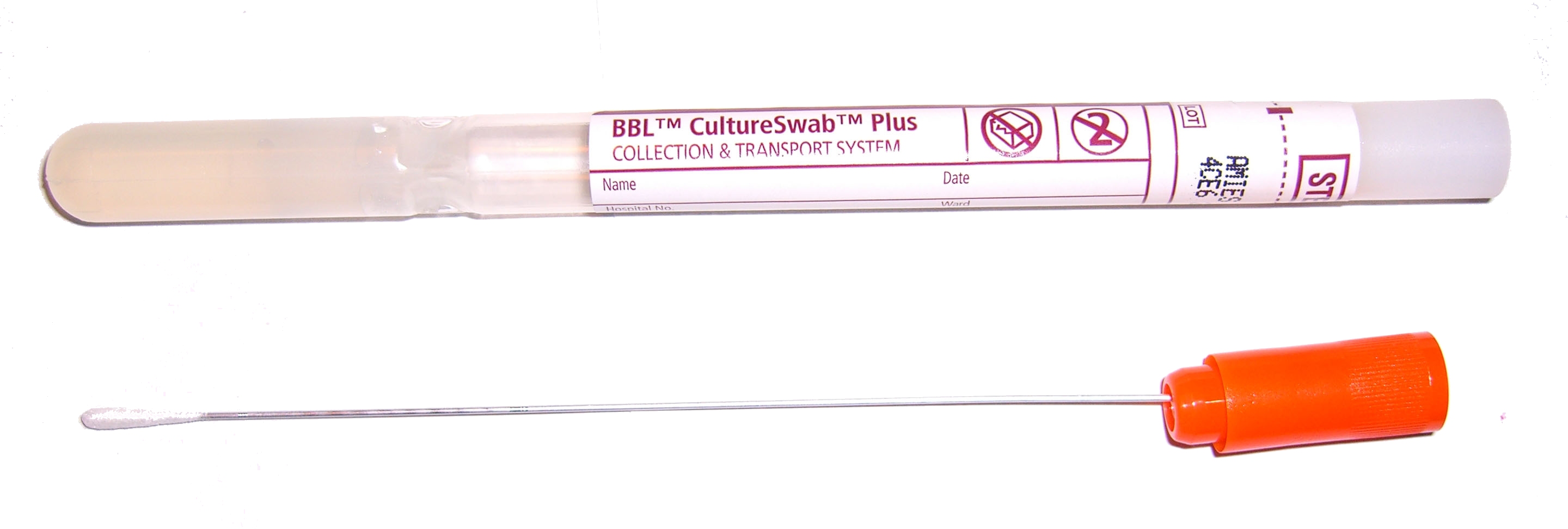
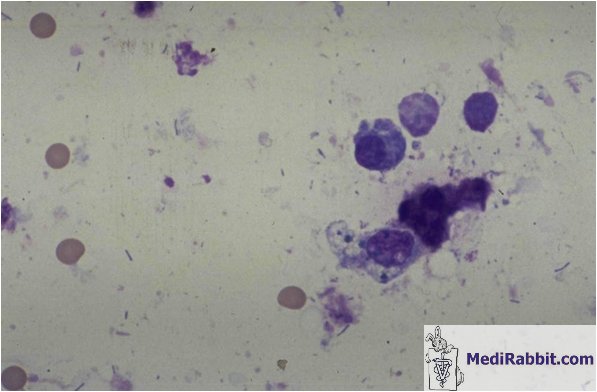
Clinical examinationThe following points should be checked, when a respiratory disease is suspected: 1. Checking the rate of respiration of the rabbit (30 to 60/min). Higher is normal, lower is abnormal. 2. Checking carefully the nostrils for discharge. This is not always obvious, as rabbits are big groomers and will clean themselves restlessly. Sometimes matted fur can be found on the front paw, sign that a discharge has occurred. 3. Examining the eyes for conjunctivitis and dacryocystitis (excretion of purulent exudate or lachrymal overflow). 4. Checking the face, the facial bones, to discover irregularities, presence of abscess, swellings. 5. Rhinoscopy. 6. Taking deep nasal and tracheal samples in order to do a bacterial culture; for the nostrils, it should be done on both sides as the infection can be unilateral. The nostril swab can be done with a flexible-wire calcium alginate tipped swab, 1 to 4 cm into the nostrils or the nasopharyngeal region. An alternative method is a nasal aspiration.
7. Examining the ears for infection. X-ray pictures of the skull may show the presence of an increased opacity in the middle and external ear. Ear infection is often associated to respiratory infection, via the passage of bacteria through the Eustachian tube, but it is not an obligation. Often, the rabbit has a decreased appetite, due to pain. 8. Microscopical examination of the blood and CBC in order to reveal hematological changes like neutrophilia (increased level of neutrophils), or leucopenia (decrease in the amount of white blood cells in the blood). It may furthermore help detect secondary organ failure. 9. When a heart problem is suspected, X-rays and electrocardiography will help to detect cardiomegaly (enlargement of the heart). 10. X-rays of the thorax will further help detect the presence of a bacterial infection (increased opacity), bronchitis, the presence of masses (abscess or neoplasia), or edema (accumulation of an abnormally large amount of fluid) around the lung(s) or the heart. Infectious bacteriaPasteurella multocida is quite contagious, although some rabbits seem to show a higher resistance to the bacterium than others. If Pasteurella sp. is present, treatment must be started ASAP, be aggressive and long, at least two weeks after total disappearance of the symptoms. It happens that a rabbit never fully recovers and need to be on maintenance antibiotics for the rest of its life. Pasteurella sp. is responsible for more than one difficult to treat disease in rabbits, to name a few: - Pleuritis (inflammation of the tissue around the lungs); - Pneumonia; - Pericarditis (inflammation of the lining around the heart); - Otitis media or interna (middle or inner ear infection); - Dacryocystitis (infection of the tear duct), - Conjunctivitis; - Mastitis (infection of the milk glands). The clinical signs are multiple, including sneezing and coughing, and nasal discharge.
Kim Chilson
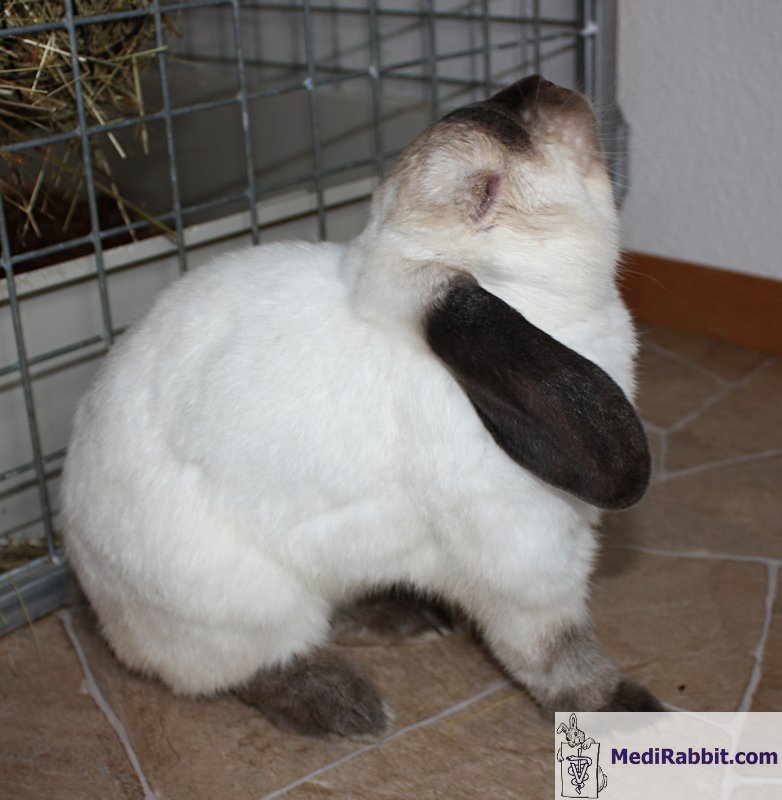
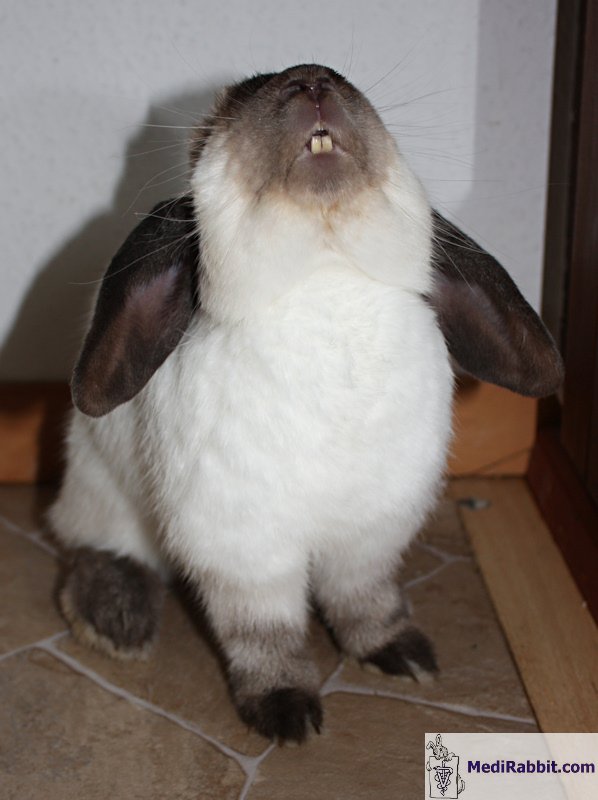
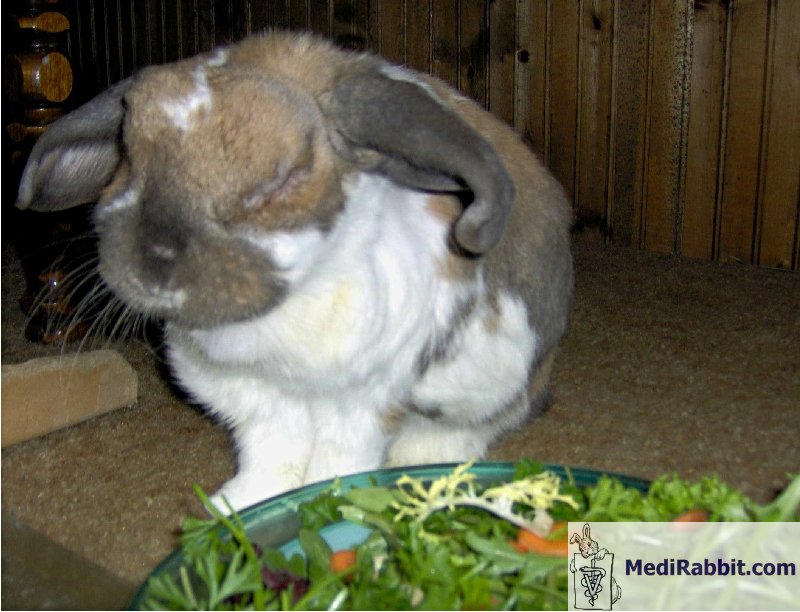
Sneezing rabbit This stage can evolve into lower respiratory tract disease, with pleuro-pneumonia or pericarditis. Bordetella bronchiseptica is typically a bacterium that shows up, when a rabbit and a guinea pig are housed together. It may be present asymptomatically in the nasal cavity of the rabbit, without development of the disease. Its presence may increase the susceptibility of the rabbit to Pasteurella sp. and the chances of developing an infection, including bronchopneumonia. The bacterium is fatal for the guinea pig. Acinetobacter sp. is a bacterium that has usually a low potential of virulence and thus rarely leads to the development of pneumonia. Its presence tends to indicate that an animal is colonized by this bacterium, rather than infected. Since it is colonizing mainly, it is important to determine if Acinetobacter sp. is the causative agent, or merely masking the presence of another pathogen.
TreatmentRespiratory tract diseases must be differentiated from a viral disease, a mechanical or neoplastic obstruction or hypersensitivity. If nothing is found and the presence of bacteria can be ruled out, the affected rabbit can be given antihistamines or corticosteroids (no longer than 3 to 5 days).��������� Successful treatment of upper respiratory infection needs to be aggressive and long. Often a combination of antibiotics is used, like oral administration of enrofloxacin or ciprofloxacin, accompanied by gentamycin based nose drops. Trimethoprim sulfadiazine is a bactericidal antibiotic used in GI tract, respiratory and urinary infections, among others. It is efficacious against a range of bacteria that affect rabbits, including Pasteurella sp., Clostridia spp., Staphylococcus sp., Bordetella sp., etc. It can be used long term, low dose. This antibiotic often shows poor results in rabbits, and often the disease comes back worse once the treatment is stopped. This could relate to the fact that half-life of trimethoprim in a rabbit last only 40 min. Azithromycin, a modified erythromycin, that does not show the side effects of the later in rabbits, is very efficacious in the treatment of Bordetella sp. (and so is enrofloxacin). The azithromycin doses used for rabbits (50mg/kg PO QD (SID) is much higher than that used for other small animals like cats and dogs (5-8mg/kg). Treatment lasts generally 7 days, after which an evaluation is done and eventual prolongation decided. Cephalosporins are bactericidal broad-spectrum antibiotics used to treat skeletal, genital/urinary, skin and soft tissue bacterial and respiratory (associated with Pasteurella sp.) infections, among others. There are several generations of cephalosporin, each aiming a more or less specific group of bacteria. Although quite safe when used in injected form, this drug is potentially nephrotoxic. The therapy against Pseudomonas sp., one of the most difficult to treat infections, must be aggressive. A sensitivity test must be done, as this bacterium is known to be multi-resistant to many antibiotics. Most successful treatments involve a combination of antibiotics, for example:
Further antibiotics, safe for use in rabbits that have shown good results in the treatment of respiratory tract disease, include:
For more information, see: Antibiotics *safe* �for use in rabbitsAside a longer systemic antibiotic therapy, additional therapy comprises: · Nasolacrimal flushes; · Nebulization with a saline solution, mucolytics and antibiotics help bring the medication deep in the bronchia and lungs in cases of rhinitis, sinusitis or pneumonia; · Fluid therapy and assisted force-feeding, when the rabbit refuses to drink and eat. If the respiratory disease is accompanied by conjunctivitis and/or dacryocystitis, local antibiotic therapy (e.g. enrofloxacin, gentamycin) must accompany the treatment protocol.
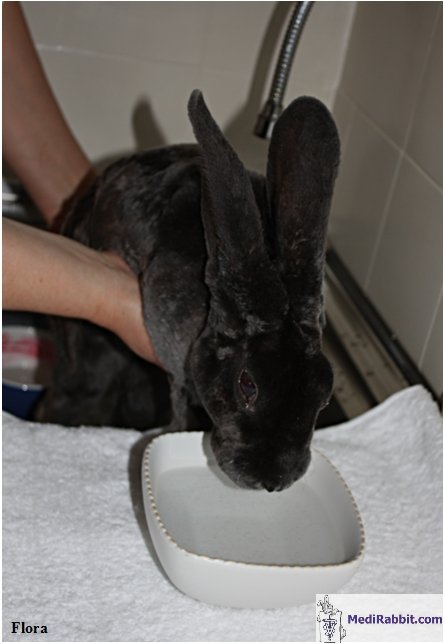
A. van Praag Flora hold above a bowl of hot water to allow her to breath humid air.
Videos about nebulization (A big thank you to Debbie Hanson. Without her help, time and expertise, the making of the nebulizer video would not have been possible. Thanks also very much to Rachel Ihlenfeldt and her rabbit Bunbun for the demonstrations) . Using a nebulizer in a rabbit affected by upper respiratory infection (URI). .
Nebulizing "chamber", when the rabbit does not like to have a mask, is panicking or aggressive. AcknowledgementsMany thanks to Michel Gruaz (Switzerland), to Kim Chilson (USA), to Tal Saarony (USA) and to Dr Katleen Hermans, (Kliniek voor Pluimvee en Bijzondere Dieren, Universiteit Gent, Belgi�) for the permission to use their pictures to illustrate this article. Further InformationAoyama T, Sunakawa K, Iwata S, Takeuchi Y, Fujii R. Efficacy of short-term treatment of pertussis with clarithromycin and azithromycin. J Pediatr. 1996; 129:761-4. Ladefoged O. The absorption half-life, volume of distribution and elimination half-life of trimethoprim after peroral administration to febrile rabbits. Zentralbl Veterinarmed A. 1979; 26(7):580-6. Ladefoged O. Pharmacokinetics of trimethoprim (TMP) in normal and febrile rabbits. Acta Pharmacol Toxicol (Copenh). 1977; 41(5):507-14. 1. |
|||||||||||||||