
Acute onset of bloat can affect any rabbit
Esther
van Praag, Ph.D.
|
|
MediRabbit.com is
funded solely by the generosity of donors. Every
donation, no matter what the size, is appreciated and will aid in the
continuing research of medical care and health of rabbits. Thank you |

|
True bloat is
a distressful and dangerous condition in rabbits. It should not be confused
with stasis or ileus – a condition that takes a few days to develop and is characterized
by reduced motility of the intestine, or the presence of some gas in the
digestive system caused by food. Bloat is a dreaded condition in rabbits,
with poor prognosis, causing excruciating pain. Most rabbit savvy vets often
opt to humanely put the rabbit to sleep, to spare it more suffering. Bloat is
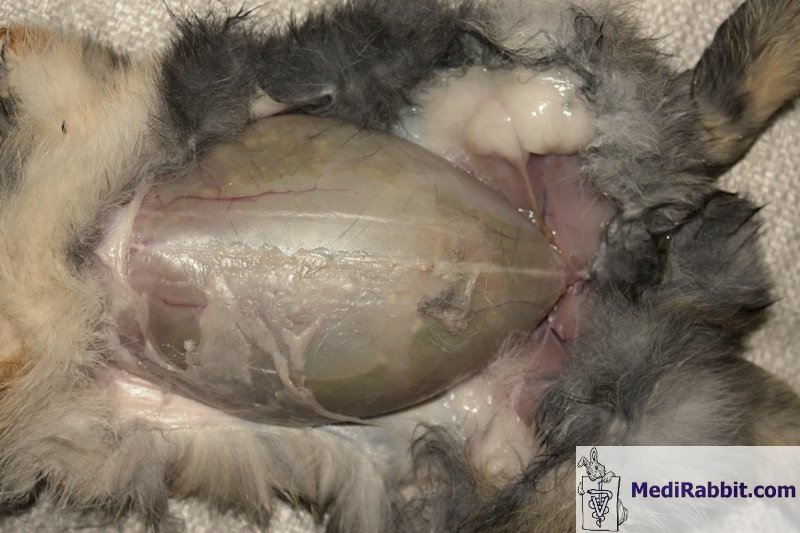
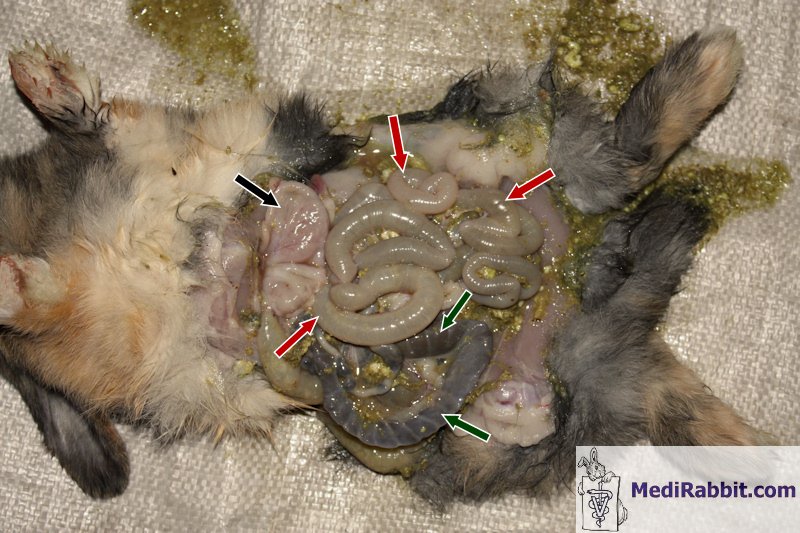
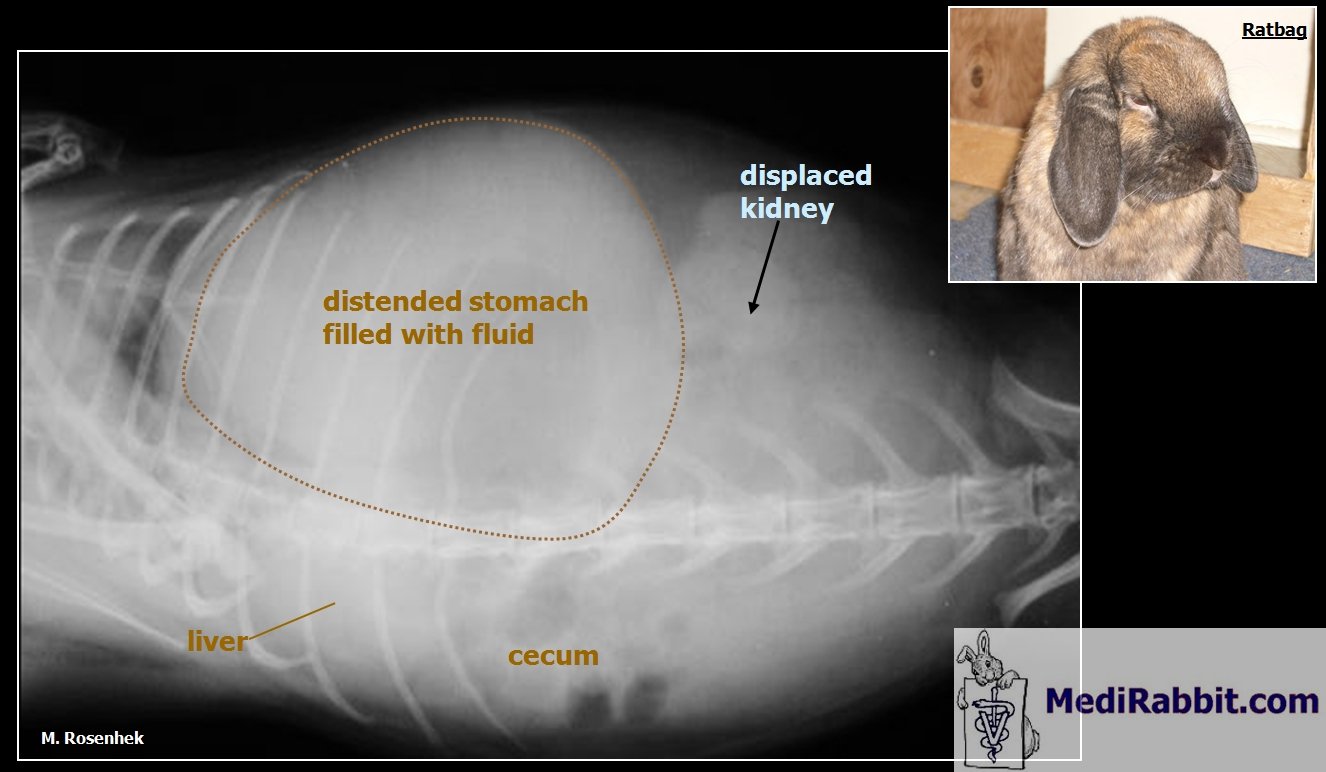
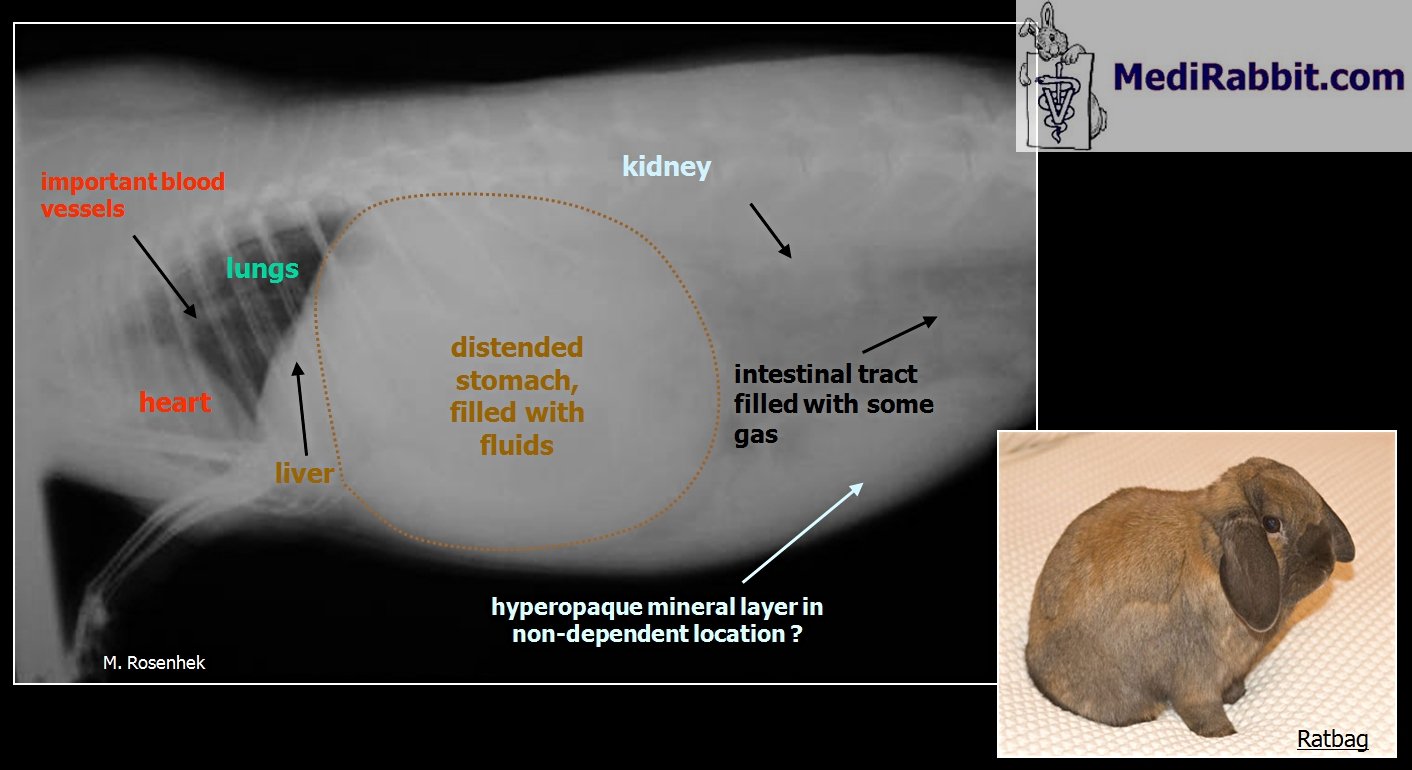
caused by an abnormal accumulation of gas that leads to an extreme distension
of the stomach. The stomach feels hard and the rabbit looks like a “balloon”.
The rabbit shows signs of terrible pain and may have difficulties to breath
properly. When bloat reaches a certain point in rabbits, it becomes
irreversible. This is due to the facts that the stomach wall of rabbits is
not as elastic as in many other animals. The distended stomach (its volume can
double) will, furthermore, compress the main blood vessels that lead blood to
and from the heart, causing secondary cardiovascular collapse and heart
failure. Blood electrolyte imbalance lead to convulsions. At this stage, the
condition is fatal. Causes of
bloat remain unknown. It may related to overeating, exercising immediately
after eating are suspected in most animals, lack of fiber in the diet, change
of diet, excessive drinking or stress, or result from a pyloric blockage,
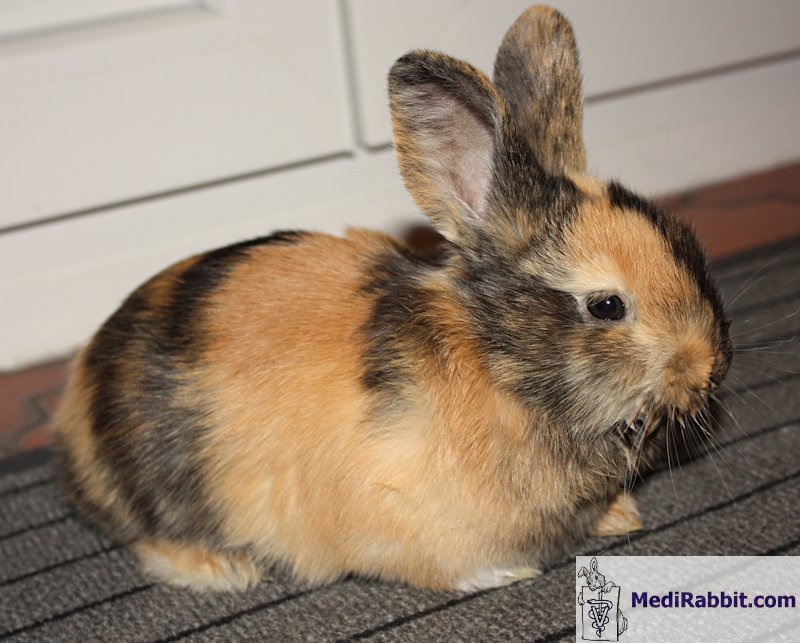
gastric ulcers or other digestive problems. For further details on causes and diagnosis, see: Carmela, acute bloat in a 3 years old rabbit, by R. Ihlenfeldt and B. Schweitz (with radiographs) Bloat
in a 24 day old rabbit
Bloat
in an adult lop rabbit
There is no treatment available for true bloat in rabbits.
Administration of corticoid drugs, antibiotics or subcutaneous fluids does
not bring relief. Introduction of a rubber catheter in the stomach in order
to aspirate the gas and the content is not very efficient. Some rabbits
survived this emergency treatment but died within 24 hours following this
procedure. Laying the rabbit on its left side does also not bring much
relief. Rabbit-savvy veterinarians often suggest euthanizing
the rabbit after diagnosis bloat, in order to shorten its sufferings. Bloat is a
veterinary emergency. A rabbit that suffers from bloat does usually not
survive longer than a few hours. When in doubt of the rabbit’s problem, if it
suffers from hypothermia, it is best to refrain from feeding it, not to
overload the stomach, the digestive system et to contact a veterinarian
a.s.a.p.
Acknowledgements
Many thanks are due to Moe Rosenhek (Canada) and Michel Gruaz (Switzerland) for
their contribution and permission to
use their pictures. |
|||||||||



e-mail: info@medirabbit.com
